
01
Reduce MTTR during production incidents
An AI SRE gathers logs, traces, metrics, Kubernetes events, deployments, and code context automatically, so responders can move from alert to root cause faster.
for teams on Kubernetes
Metoro's AI SRE agents detect production issues, investigate alerts, verify deployments, identify root causes, and generate pull requests to fix them.













Install a single daemonset into your Kubernetes cluster. No code changes, no sidecars, no SDKs.
And you're done.
Metoro watches all your clusters for issues, then investigates using its collected telemetry to find the root cause.
Metoro turns detected issues into clear, investigation-backed notifications with the root cause, supporting evidence, and suggested fixes.
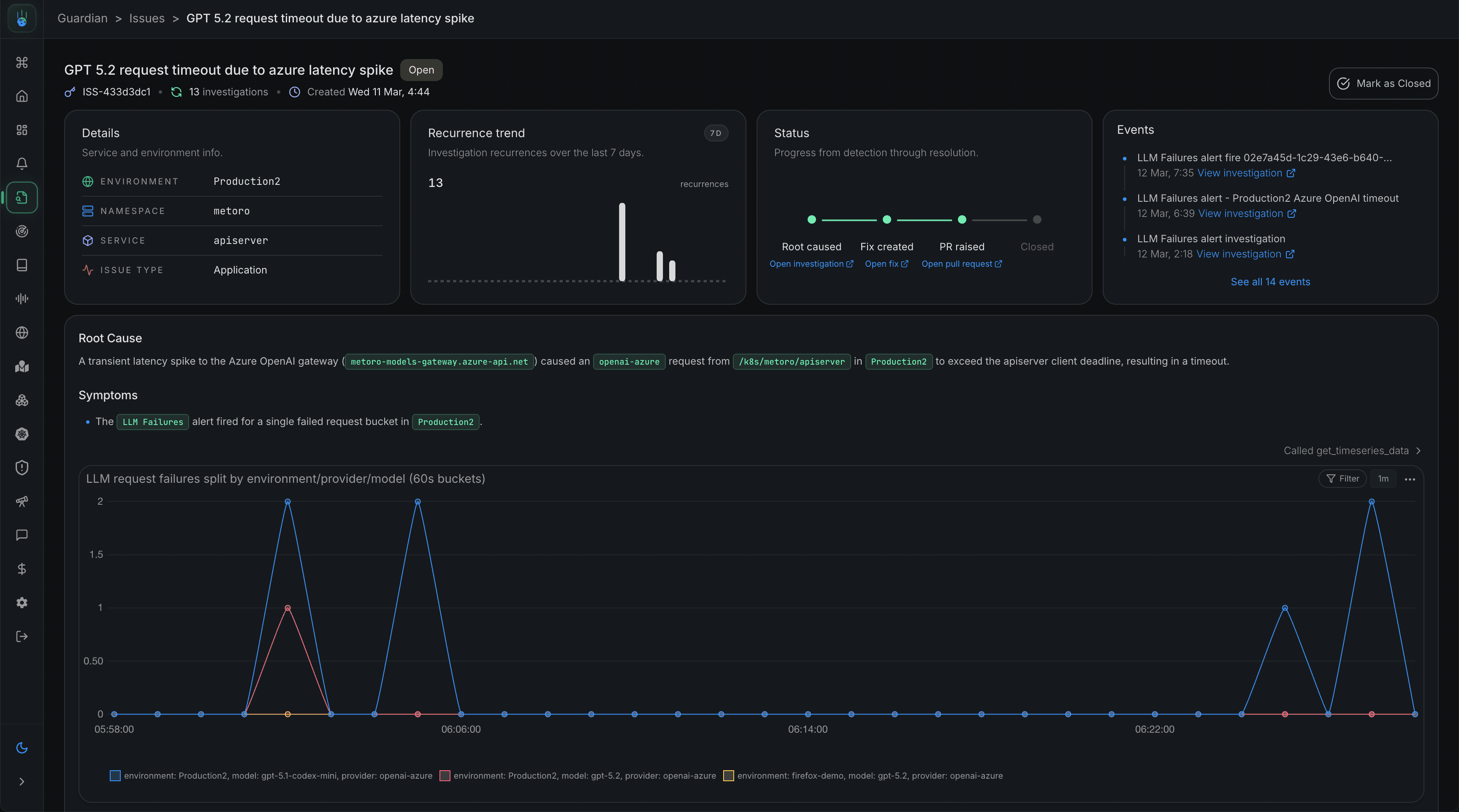
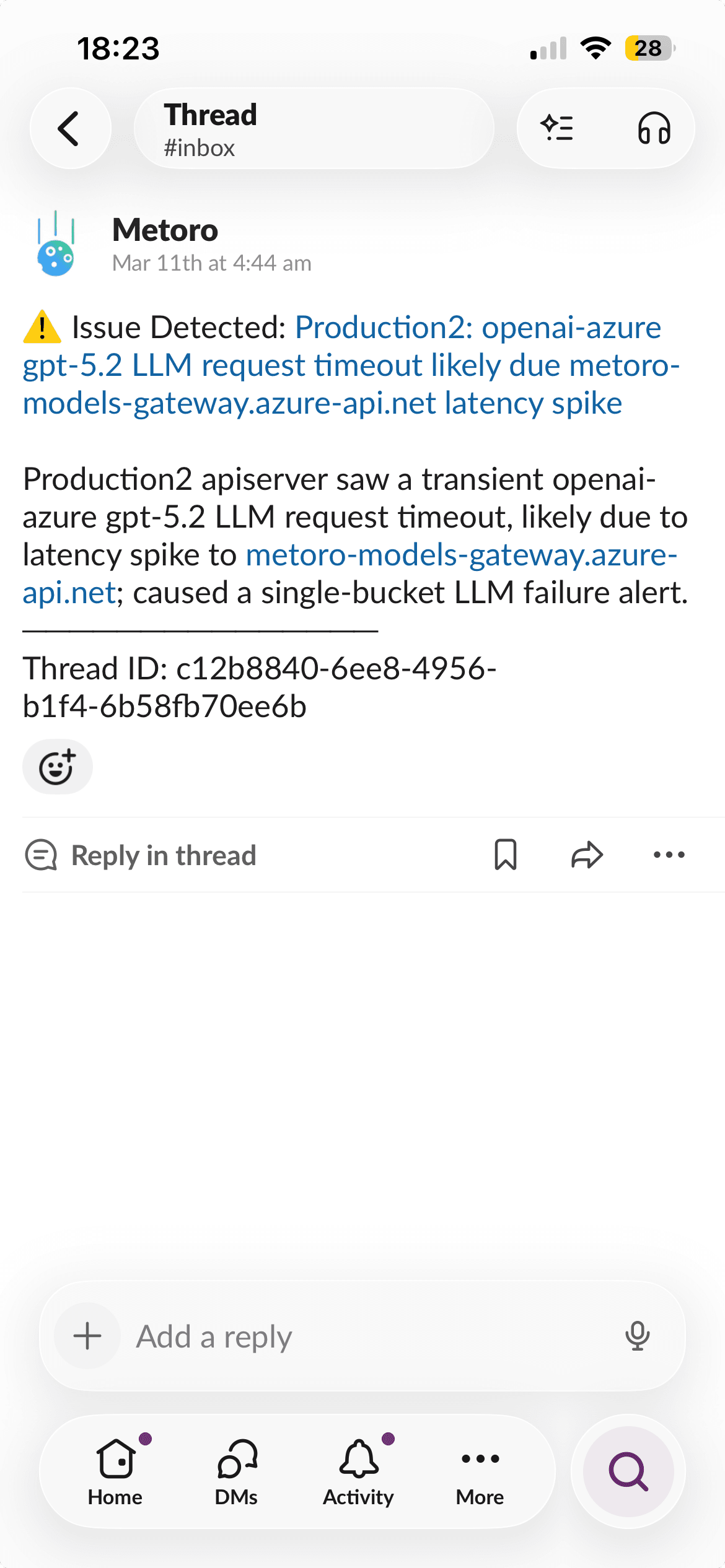
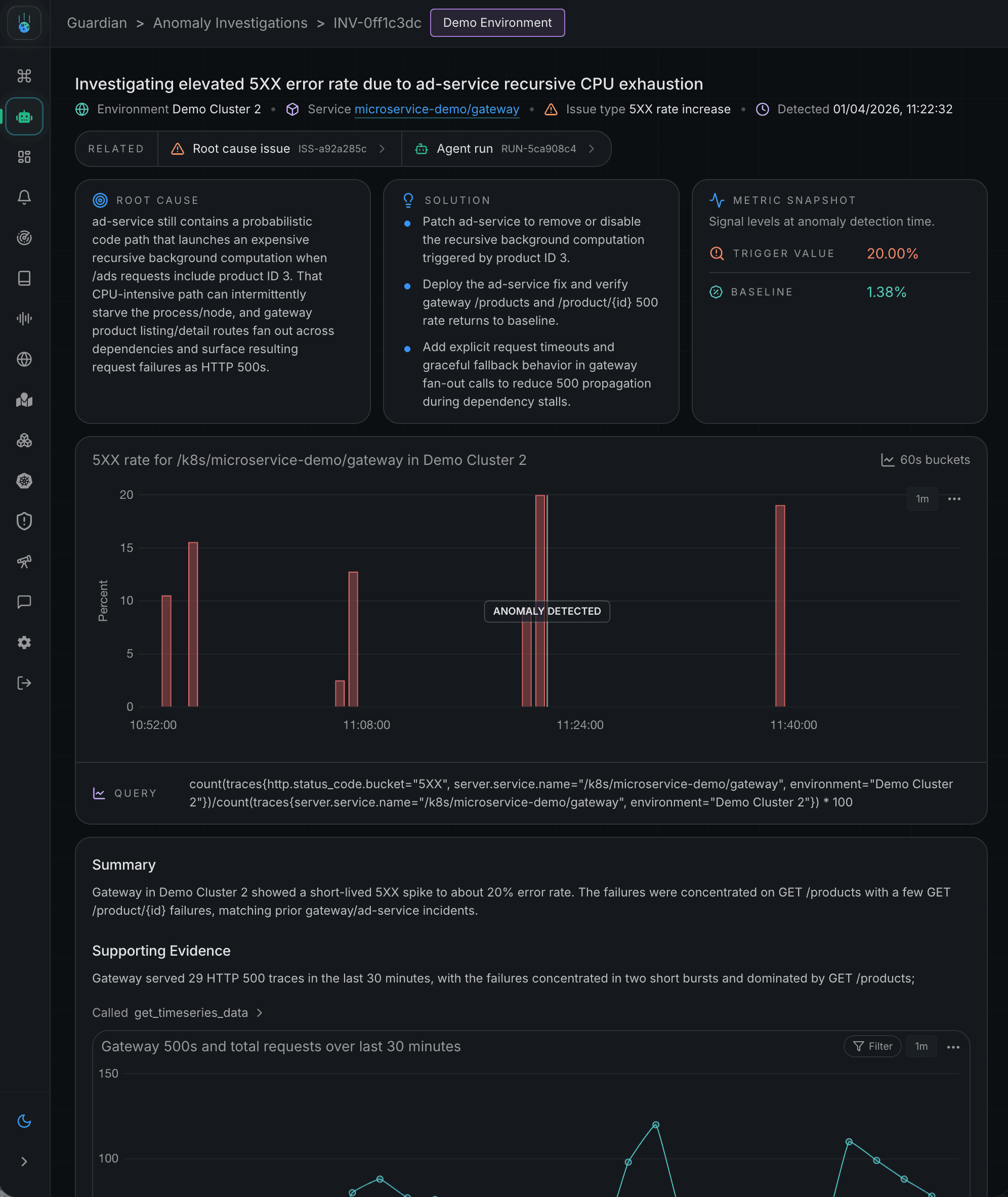
Metoro autonomously monitors all your services and infrastructure to detect issues. Once an issue is detected, Metoro automatically root causes it and opens a pull request with a fix.
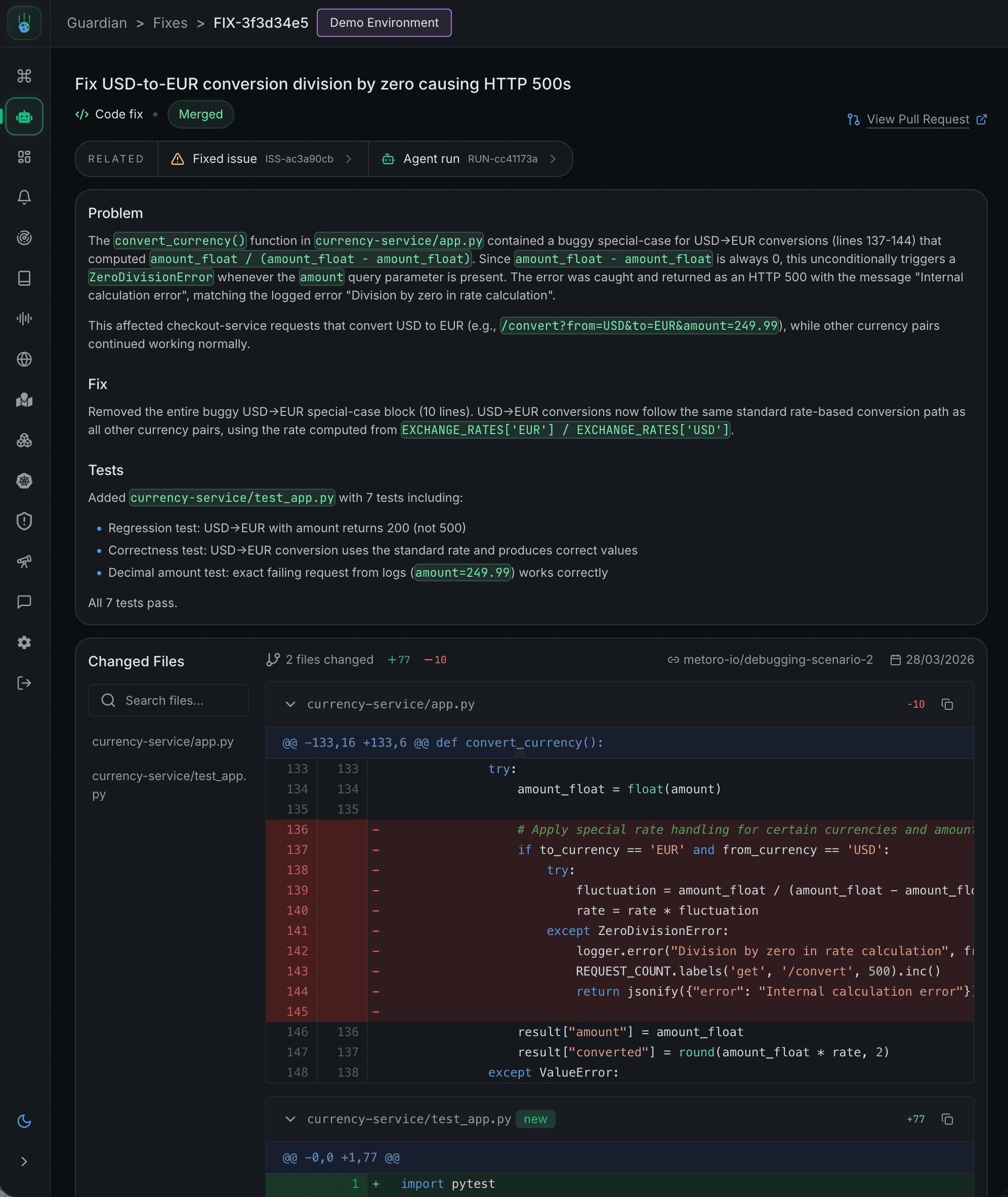
Metoro turns root cause analysis into proposed code fixes. When it identifies the offending change, it drafts a pull request with the fix, evidence, telemetry links, and an RCA summary - ready for your team to review and merge.
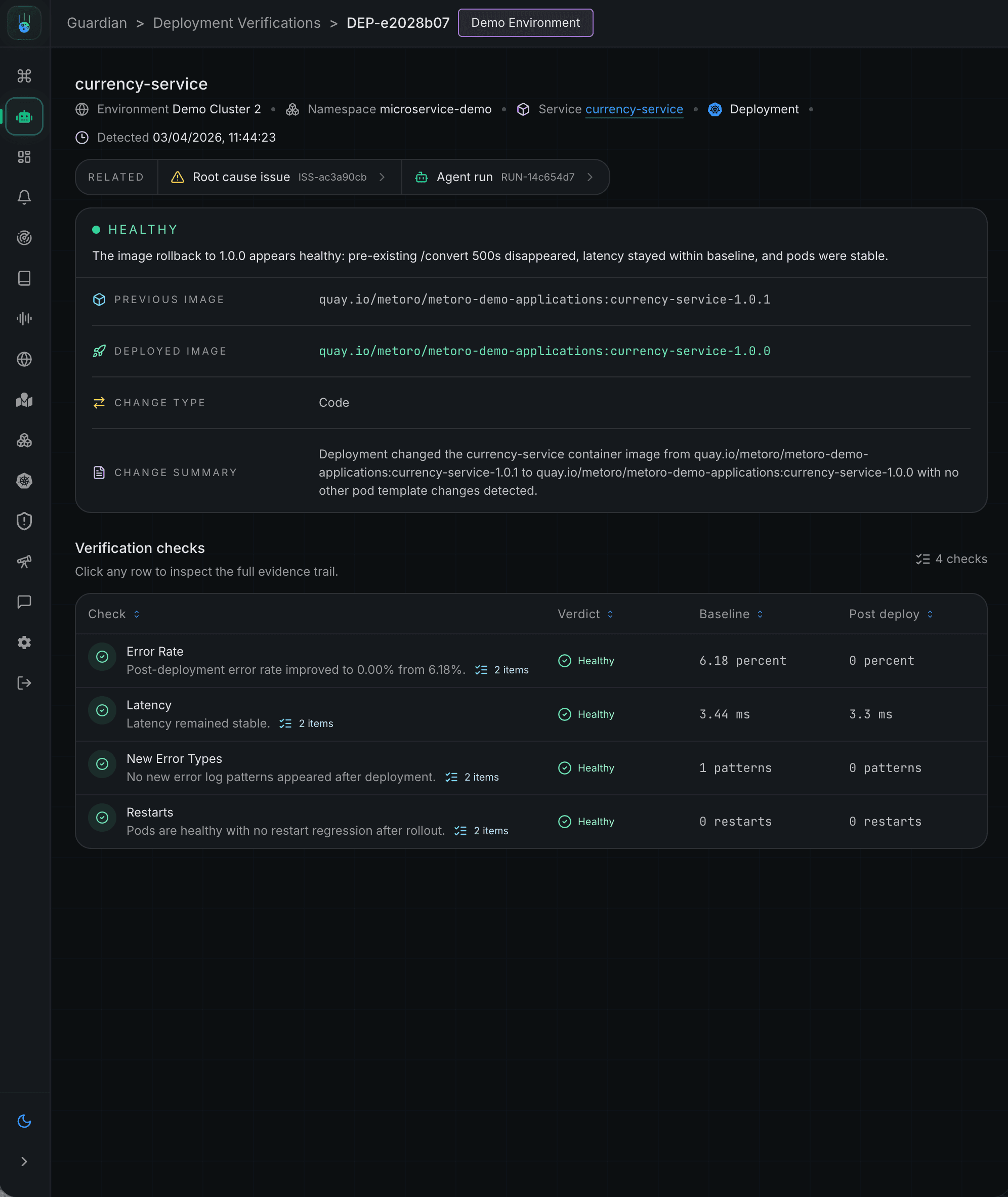
Metoro compares each deployment's behavior against the baseline. Regressions surface in Slack with a pre-drafted rollback PR - before a customer notices.
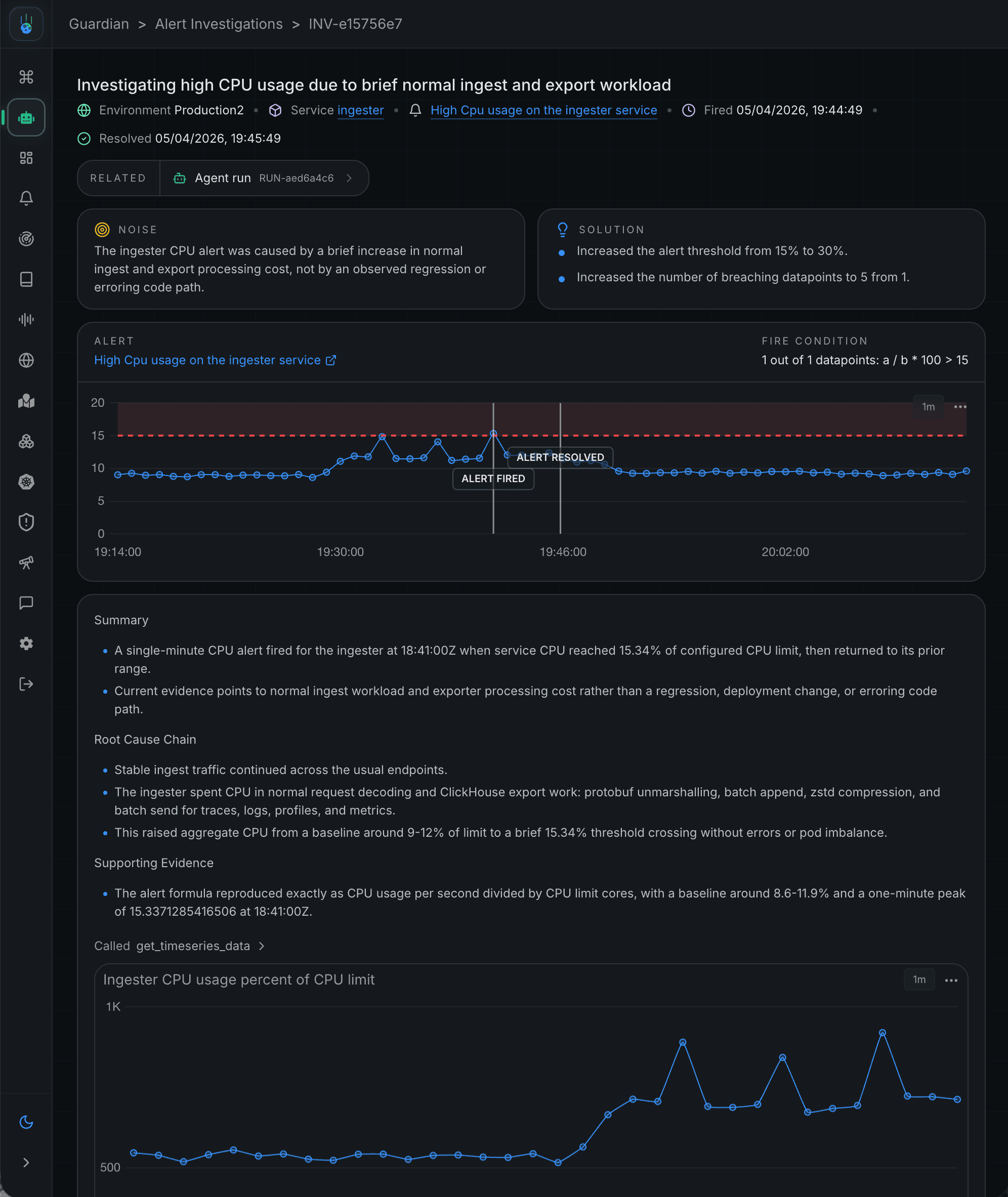
Metoro investigates every firing alert, separates noise from real production issues, and sends your team the likely root cause, evidence, and next steps in Slack.
Metoro brings its own eBPF telemetry layer for Kubernetes and combines runtime signals, Kubernetes state, deployments, and code changes into one reliable investigation context.
Try PlaygroundAI SRE platforms help Kubernetes teams reduce MTTR, lower alert fatigue, catch deployment regressions, and turn incident evidence into remediation steps.
An AI SRE gathers logs, traces, metrics, Kubernetes events, deployments, and code context automatically, so responders can move from alert to root cause faster.
Instead of handing engineers another page with no context, an AI SRE investigates the alert, separates noise from real issues, and summarizes what changed.
AI SRE deployment verification compares new rollouts against live production baselines and flags regressions before customers report them.
When telemetry is incomplete, investigations stall. Metoro uses eBPF telemetry for Kubernetes so the AI starts with runtime evidence, not only pre-existing dashboards.
The same investigation steps happen during every incident: query telemetry, inspect Kubernetes state, compare changes, and test hypotheses. An AI SRE automates that loop.
Finding the likely cause is only part of the workflow. Metoro can generate suggested fixes and pull requests so teams can review a concrete next step.
Metoro has made visibility into our Kubernetes environment effortless with on-demand event analysis and AI-driven root-cause investigations. Nothing is hidden anymore.
Metoro absolutely slaps, so good ❤️
Detection, investigation, and the fix PR - all before I finished reading the page. It's the first AI SRE that's actually earned its name.
Metoro has been a huge boon to our observability ecosystem; saving us time and effort getting the information we care about most out of our clusters. The only thing cooler than the tool has been the people behind it.
It found exactly what I was looking for in the logs. Amazing.
We used to spend an hour digging through dashboards when something broke. Now Metoro figures it out in minutes - our on-call engineers love it.
We installed Metoro, and it just worked.
I'm literally able to look up at a Slack notification from Metoro whilst having noodles, tap the link, access the Metoro dashboard, see what customers on Porter Cloud are doing and take a call in real-time. For me, that's the best thing ever.
In the last week, we've detected and blocked 10 malicious agents running on our infrastructure. Without Metoro, they would still likely be running.
Metoro made it incredibly simple for us to not just observe and trace logs, but also to dive into AI-driven investigations effortlessly - turning complex Kubernetes monitoring into a smooth, intuitive experience.
Anyone running user agents on their infrastructure needs a solution like Metoro. It's just a case of when, not if a malicious agent will be running.
Common questions about Metoro's AI SRE for Kubernetes.
Detection to remediation. Automated. One-minute install. No code changes.